
Yeni başlayanlar için kılavuz
In recent years, the DeFi (Decentralized Finance) market has evolved beyond simple token trading and liquidity mining into a more mature phase of on-chain asset management. Among these innovations, DeFi Vaults have become an essential tool for investors seeking on-chain yields. For most users, the biggest hurdle isn't a lack of opportunities—it's the sheer complexity of the process. Whether it's lending, liquidity provision, restaking, or yield aggregation, constant market monitoring and rebalancing are required. Vaults solve this by using automated strategies and professional management to lower the barrier to entry and boost capital efficiency, all while keeping users in control of their on-chain assets.
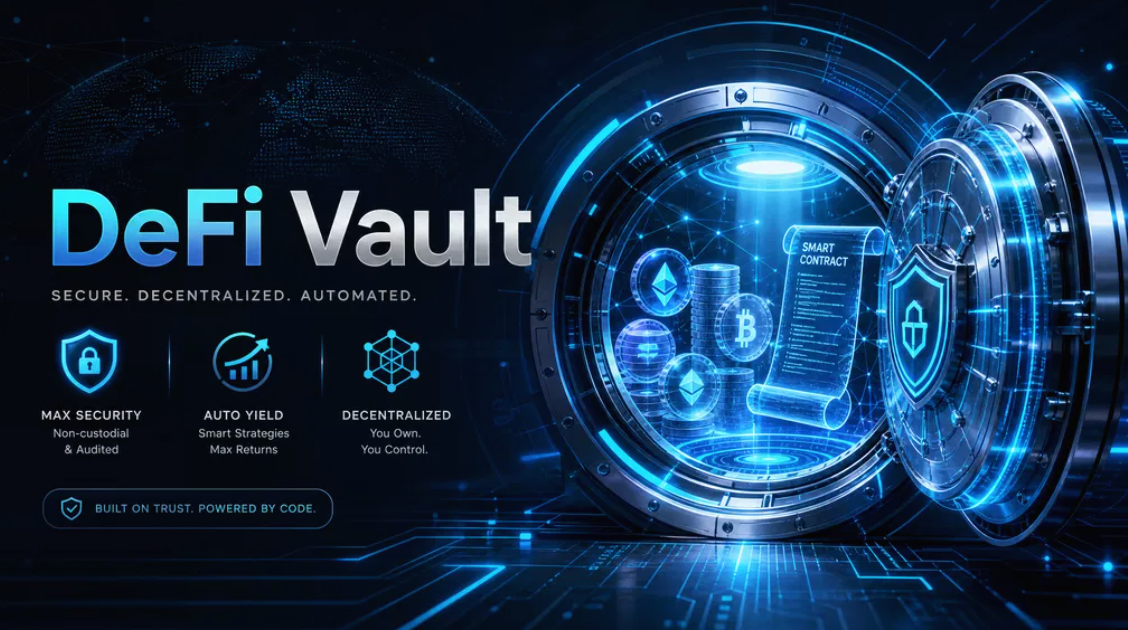
Think of a DeFi Vault as an on-chain asset management tool. When you deposit assets into a Vault, your funds don't sit idle—they're automatically deployed across different DeFi protocols and yield sources based on a pre-set strategy. This model is similar to traditional fund management, but with a key difference: every operation is executed via smart contracts, and the entire process is transparent and open. You can track asset flows, yield sources, and strategy allocations at any time. A Vault isn't just a deposit tool—it's a complete on-chain yield management system.
While the specifics vary across platforms, the general workflow of most Vaults is fairly consistent. First, you deposit supported assets—like stablecoins or ETH—into the Vault. The smart contract then allocates those funds according to the strategy rules. For example, some funds might go to a lending market to earn interest, another portion to a liquidity pool for trading fee income, and maybe some to a restaking protocol for extra yield. When market conditions shift, the Vault automatically rebalances the allocation to maintain an optimal risk-yield balance. All generated yield accumulates in the Vault, and many platforms even auto-compound it through reinvestment. The entire process runs on smart contracts, so you don't need to lift a finger.
Many people assume a Vault's yield comes from a single protocol, but modern Vaults typically integrate multiple sources. The most common is lending market yield: when borrowers use your deposited assets, they pay interest, and the Vault distributes a portion to depositors. Another major source is liquidity provision yield: when the Vault deploys funds into decentralized exchange liquidity pools, it earns a cut of the trading fees.
More recently, the restaking market has become a key yield source for many Vaults. By taking already-staked assets and resecuring them into other validation or security services, asset utilization gets a further boost. Some strategies even combine multiple yield streams to create complex, layered return structures.
Even though Vault execution is automated, strategy design still requires expert oversight. Strategy managers (curators) define the rules for asset allocation, risk parameters, and yield targets. They continuously adjust the strategic direction based on market conditions, deciding which protocols and markets get the funds.
For instance, in a stable market, a strategy might increase its lending market allocation; when volatility spikes, it could shift more into stablecoin holdings to reduce risk. So, a Vault's performance depends not just on the smart contract code, but also heavily on the skill of the strategy management team.
Traditional DeFi requires you to manually hop between multiple protocols—first deposit into a lending market, then move the yield to a liquidity pool, then claim rewards and reallocate. It works, but it's time-consuming and costly. A Vault bundles all these steps into a single product, using smart contracts to handle asset movement and yield reinvestment automatically. Because it continuously compounds and optimizes the strategy, it's almost always more efficient than manual management. For large institutions, this approach is far more aligned with professional asset management standards.
As the on-chain financial market matures, more institutions are entering DeFi. But institutional capital demands clear risk frameworks and structured asset management—you can't manage massive on-chain positions manually. Vaults offer the strategy transparency, automated management, and risk controls that fit this bill. Many new Vaults are now incorporating fixed-income products, RWA (Real World Asset) allocations, and comprehensive asset reporting systems, further bridging DeFi and traditional finance. Vaults are no longer just retail tools—they're becoming essential infrastructure for on-chain asset management.
Going forward, the competitive edge for Vaults will likely shift from chasing the highest yields to offering better strategy transparency, risk management, and asset allocation efficiency. With advances in AI, some Vaults may adopt automated risk analysis and quantitative decision-making to speed up strategy adjustments. Multi-chain asset management is also emerging as a key trend, enabling Vaults to handle assets across ecosystems like Ethereum, Solana, and Base. Meanwhile, the rise of RWA yield products and on-chain fixed-income markets could further expand what Vaults can do.
DeFi Vaults have dramatically lowered the technical barrier to earning on-chain yields, while pushing asset management toward greater professionalism and automation. By combining smart contracts, automated strategies, and expert oversight, Vaults let users allocate assets more efficiently while preserving the transparency and openness of blockchain finance. As institutional capital continues to flow into Web3, Vaults are evolving from simple yield tools into full-fledged on-chain asset management infrastructure. These products are poised to become an indispensable part of the DeFi ecosystem.
Paylaş
İçindekiler








